Why Account Region Matters More Than Tier in 2026
Buyers obsess over KYC level, but the verifying jurisdiction often determines what an account can actually do. A guide to thinking about region first.
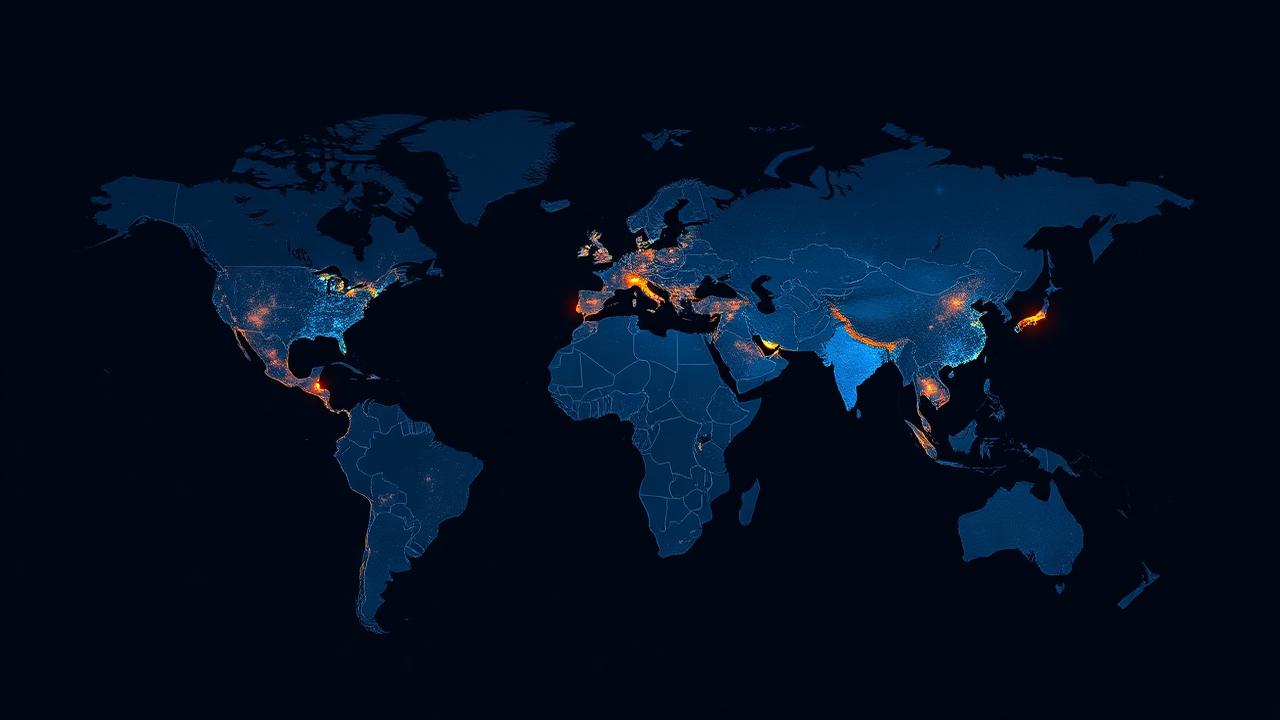
When buyers compare verified accounts, they almost always start with KYC level. Level 2 or Level 3? Higher limits or lower limits? Faster onboarding or slower? The level question feels like the primary axis of value, and for years it was. In 2026 it is not. The single most important variable on a verified-account listing is the verifying jurisdiction, and the gap between region and tier in actual operational impact has only widened over the past two years.
This article makes the case for region-first thinking, walks through how the verifying jurisdiction affects feature access, fiat rails, regulatory posture, and resale value, and gives buyers a practical framework for selecting accounts based on what they actually need to do.
Why region drives feature access
Exchanges do not offer the same feature set to every user. The product surface available to a given account depends heavily on the verifying jurisdiction, because that jurisdiction determines which regulatory regimes the account falls under and which licenses the exchange must hold to serve them.
Concretely: derivative product availability, leverage caps, options access, lending and yield product access, certain spot pair availability, certain stablecoin availability, and fiat rail availability are all gated by jurisdiction on most major exchanges. A US-verified Binance account looks very different from a non-US-verified Binance account because Binance.US is a different product from Binance global. A European-verified account on a major exchange post-MiCA looks different from a European-verified account pre-MiCA. A UK-verified account post-FCA financial promotions regime has different marketing and product access than a UK-verified account did two years ago.
Why region drives fiat rails
Fiat rails are the most visible regional dependency. SEPA works for European-verified accounts, ACH works for US-verified accounts, FPS works for UK-verified accounts, Pix works for Brazilian-verified accounts, UPI works for Indian-verified accounts, and so on. The headline KYC level matters - rails usually require at least Level 2 - but the level alone does not unlock the rail. The right jurisdiction does.
Within each fiat rail, the regional verification also affects fee structures, transfer limits, processing times, and the friction of any compliance review. A SEPA transfer from a European-verified account to a SEPA-eligible bank is fast and cheap. A USD wire from a non-US-verified account to a US bank is slow, expensive, and frequently subject to additional documentation requests. These differences accumulate into very different working economics for accounts on different jurisdictions.
Why region drives the analytics posture
Recall from our on-chain analytics article that compliance vendors and exchange risk engines apply different baselines depending on the verifying jurisdiction. An account verified in a jurisdiction the receiving exchange views as low-risk gets a different default risk score than an account verified in a jurisdiction the receiving exchange views as higher-risk. This affects which deposits process cleanly, which trigger reviews, and how aggressively the account's behaviour is monitored.
The implications cascade. Accounts in high-trust jurisdictions can usually source funds from a wider range of counterparties without triggering friction. Accounts in lower-trust jurisdictions have a narrower set of "clean" sources and a higher likelihood of routine compliance scrutiny. The operational tax of running an account in a lower-trust jurisdiction is real, even when the headline limits are identical.
Why region drives resale value
The resale value of a verified account is heavily influenced by jurisdiction. High-trust jurisdictions trade at significant premiums. Lower-trust jurisdictions trade at discounts. The premium has widened, not narrowed, as the analytics layer has become more important and as the compliance frameworks have diverged. A clean Level 2 account in a top-tier jurisdiction will often command more than a clean Level 3 account in a lower-tier jurisdiction.
This matters even for buyers who are not planning to resell, because resale value is a proxy for operational value. If the market is willing to pay more for an account, it is because the market believes that account will produce more value in operation - and the market is usually right about this.
The trust hierarchy in 2026
Without ranking specific countries (which would be both tedious and out of date by the time you read it), the rough hierarchy in 2026 looks like this. At the top are jurisdictions with comprehensive crypto regulatory frameworks, deep banking infrastructure, and strong international cooperation: Singapore, Switzerland, Hong Kong (with caveats), the UK, much of Western Europe under MiCA, and the more compliance-forward US states. Below that are jurisdictions with workable frameworks but more limited international integration: parts of Eastern Europe, Japan with its conservative product set, several Southeast Asian markets, and the Gulf states. Below that are jurisdictions with thinner regulatory clarity or higher operational friction. At the bottom are jurisdictions subject to sanctions or comprehensive restrictions.
The hierarchy is not static. Several jurisdictions have moved up sharply in the past two years (the UAE and parts of Southeast Asia notably). A few have moved down. Buyers should think of the ranking as a current-state observation, not a permanent feature of any specific country.
A framework for selecting by region
Start with what you need to do. If you need a specific fiat rail, the verifying jurisdiction is determined for you - you need an account verified where that rail lives. If you need a specific product (certain derivatives, certain stablecoins, certain yield products), check which jurisdictions actually unlock those products on the venue you care about. If you need a specific operational footprint (low compliance friction, broad counterparty acceptance), prioritise jurisdictions at the top of the trust hierarchy.
If you have flexibility, default to the highest-trust jurisdiction that fits your use case. The premium you pay at purchase is recouped through the operational headroom you gain. Buyers who optimise for the lowest acquisition price routinely end up paying more in operational friction over the life of the account than they saved at the purchase.
When lower-trust jurisdictions are actually right
There are real use cases for accounts in lower-trust jurisdictions. Regional arbitrage strategies, specific local fiat operations, jurisdiction-specific product access (which sometimes inverts the global ranking), and certain compliance contexts may all favour a verification that would not be the headline winner on a global trust ranking. The point is not that high-trust is always right. The point is that jurisdiction should be a primary decision variable, not an afterthought.
How Verified Vaults thinks about this
Every listing on our platform discloses the verifying jurisdiction prominently and describes what that jurisdiction unlocks at the relevant exchange. We deliberately surface region-level filters so buyers can narrow down by jurisdiction before evaluating individual listings. Our pricing reflects the market reality that jurisdiction is now a primary value driver, not a footnote.
We also push back, gently, when buyers come to us asking for "the highest tier" without specifying what they actually want to do. The highest tier in the wrong jurisdiction is often less useful than a moderate tier in the right one, and a few minutes of conversation up front usually saves a buyer from a purchase they would regret.
Final word
Region is the variable buyers most need to internalise in 2026. Tier still matters - it determines the headline limits and the basic feature gates - but jurisdiction determines what the account can actually do across regulatory, operational, and value-realisation dimensions. The buyers who lead with region build portfolios that operate cleanly. The buyers who lead with tier alone keep being surprised by friction that the region would have predicted.
Pick the right region, then pick the right tier inside it. In that order.
Ready to buy or sell on Verified Vaults?
Browse verified listings or contact us on WhatsApp at +44 7474 711525 or Telegram @verifiedmarts to confirm an order.